Best AI Image Generator 2026: Top Models Compared
We compared the leading AI image generators of 2026 - Nano Banana, Seedream, Flux, GPT Image, Ideogram, Imagen - on quality, editing and use case.
WearAI Team
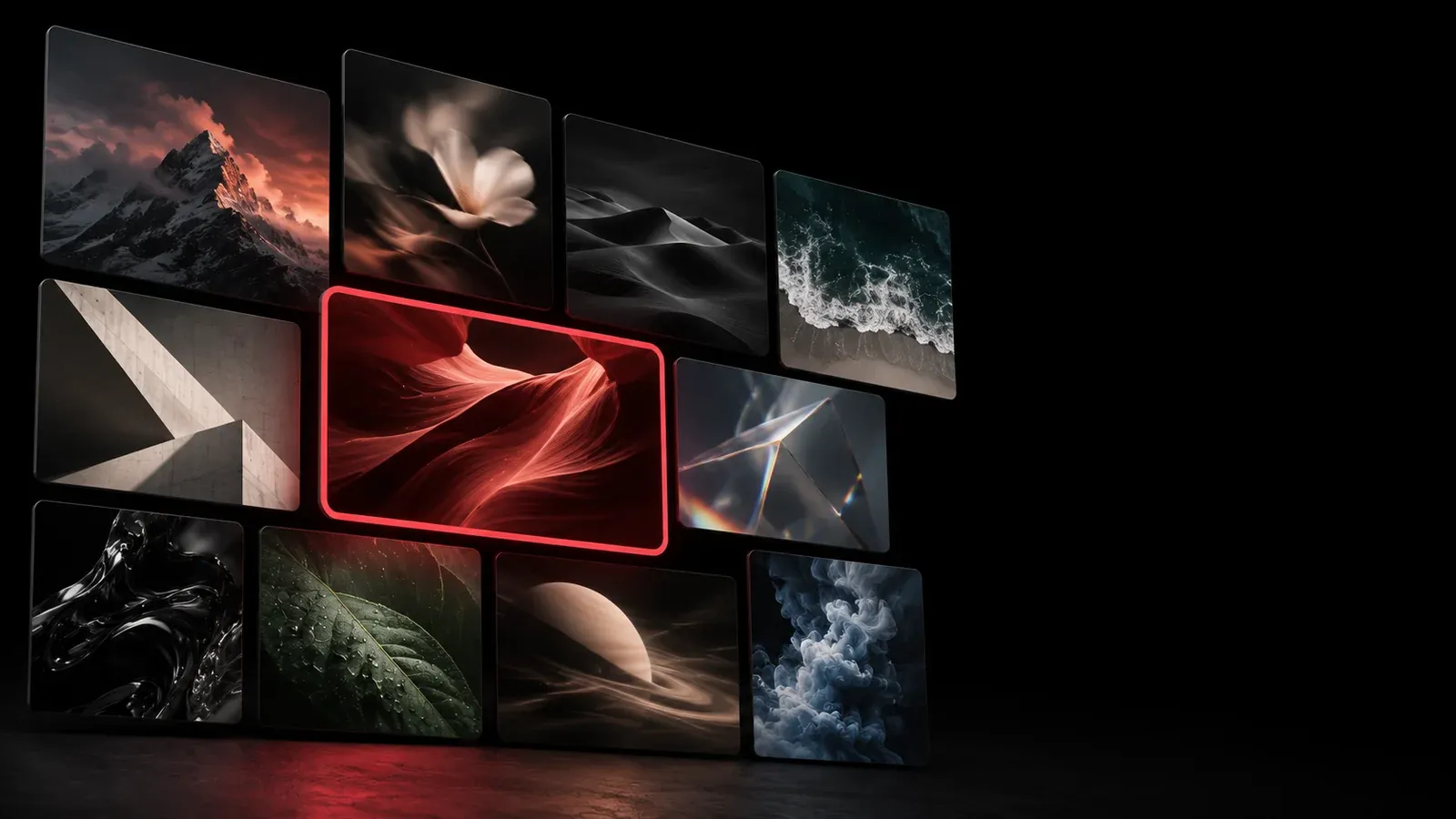
There is no single "best" AI image generator anymore — there is a best model for consistency, a best model for photorealism, a best model for text inside an image, and a best model for editing a photo you already have. In 2026 the leading image models each specialize, and the smart move is matching the model to the job rather than forcing one model to do everything.
This roundup compares the top AI image generators available today, with honest strengths and trade-offs for each. Wherever a model runs on WearAI, we note it — you can start creating free and run many of these models side by side in one workspace, so you can pick per task instead of committing to one tool. A couple of well-known names (Midjourney, DALL·E) are covered for completeness even though they run on their own platforms, not on WearAI.
Quick Verdict: Best AI Image Generator by Use Case
Short on time? Here is the best-for shortlist.
- Best for consistency (same subject across shots): Nano Banana (Google)
- Best for consistency plus photo editing: Seedream 4.5 (ByteDance) — text-to-image and image-to-image
- Best for prompt-following and text in an image: GPT Image / OpenAI 4o Image (OpenAI)
- Best for photorealism: Flux-2 Pro (Black Forest Labs) and Imagen 4 (Google)
- Best for typography, posters, and logos: Ideogram V3
- Best for fast, open photorealistic generation: Qwen Z-Image (Alibaba)
- Best all-in-one image + video: Grok Imagine (xAI)
- Best-known creative-community tools (separate platforms): Midjourney, DALL·E
Most of the models above run on WearAI in a single workspace. Midjourney and DALL·E do not — they are covered here for context only.
How We Evaluated
We did not score these models on a leaderboard, and we did not invent benchmark numbers. Instead, we compared them on the dimensions that actually decide which one you should reach for:
- Consistency — can it keep the same face, product, or character across a set of images?
- Editing (image-to-image) — can it take a photo you already have and modify it, or is it text-to-image only?
- Prompt-following — does it stick closely to a detailed, multi-part brief?
- Text in image — can it render readable words, labels, and headlines instead of garbled letters?
- Photorealism — do materials, skin, and lighting read as a real photograph?
- Resolution — what output size does it deliver, and is it print-ready?
- Access — can you actually try it, and can you run it next to other models?
One thing worth stating up front, because a lot of roundups blur it: not every image model can edit an existing photo. Text-to-image models generate from a prompt only. True image-to-image editing (drop in a photo, describe the change) is a distinct capability, and among the models here it is genuinely supported by Seedream 4.5, GPT Image 1.5, Qwen2 Image Edit, and Grok Imagine. We flag this per model so you do not pick a text-only model for an editing job.
Nano Banana (Google) — Best for Consistency
Best for: keeping the same subject, product, or character consistent across a whole set of images — lookbooks, on-model fashion, and product sets.
Nano Banana is Google's Gemini image model, and its calling card is consistency rather than drift. Describe the same subject and it holds the look across a run of generations, so a model or a product stays recognizable shot to shot without a reshoot. That makes it a strong pick for editorial sets, on-model fashion, and product photography where a coherent look matters more than a single hero frame.
The main trade-off to know: Nano Banana is a text-to-image model, so it generates from a prompt and does not do image-to-image editing of a photo you upload. Output is 1K (around 1024px). On WearAI it runs alongside its newer tiers — Nano Banana, Nano Banana 2, and Nano Banana Pro — and you can switch versions without leaving the workspace. Try it at /create/image/nano-banana.
Seedream 4.5 (ByteDance) — Best for Consistency Plus Editing
Best for: consistent product and fashion sets where you also need to edit or refine from a reference — e-commerce imagery and campaigns.
Seedream 4.5 is ByteDance's image model, and it earns a spot for combining two things many models keep separate: multi-image consistency and genuine image-to-image editing. It works from a text prompt or from reference images (up to three), so you can hold a product or a look consistent across a set and also feed it something you already have to restyle or refine faithfully. It is WearAI's default image model for exactly that reason.
Resolution goes up to native 4K, which is crisp enough for listings and print. The practical trade-off is less about weakness and more about fit: it is a workhorse for commerce and consistency rather than a niche specialist in, say, typography. On WearAI it runs as Seedream 4.5 plus a lighter Seedream 5.0 Lite tier. Start at /create/image/seedream-4-5.
GPT Image / OpenAI 4o Image (OpenAI) — Best for Prompt-Following and Text
Best for: complex, multi-part briefs and images that need readable words in them — product shots with labels, promo creative, and social visuals.
OpenAI's image models — GPT Image (1.5 and 2) and the native OpenAI 4o Image — are the ones to reach for when the prompt is long and specific and you need it followed closely. They are also known for rendering in-scene text more legibly than most, which is genuinely useful for product labels, packaging mockups, and promo copy baked into the image.
The trade-off: GPT Image 2 and OpenAI 4o Image are text-to-image models, so they generate from a prompt rather than editing an uploaded photo. If you specifically need editing from OpenAI, GPT Image 1.5 supports image-to-image. Resolution is 1K on GPT Image; OpenAI 4o Image outputs 1024×1024, 1536×1024, or 1024×1536. On WearAI all three run in one place, so you can move between them per look. Try them from /create/image or the OpenAI 4o Image page.
Flux-2 Pro (Black Forest Labs) — Best for Photorealism
Best for: photoreal on-model fashion, texture-accurate product shots, and polished editorial lifestyle where realism has to survive a close crop.
Flux-2 Pro is Black Forest Labs' pro-tier model, and photorealism is the point. Fabric, skin, and materials render with the kind of detail and lighting that reads as photography rather than illustration, and it stays faithful to what you describe. It is built for finished campaign output, not quick previews, and it comes in 1K and 2K so you can pick resolution for the job.
The honest limitation: Flux-2 Pro is text-to-image only, so it does not edit an existing photo — reach for a dedicated editing model if that is the task. On WearAI it runs alongside a more flexible, cost-efficient Flux 2 Flex tier, and you can switch between them without leaving the workspace. Explore it from /models or the Flux page.
Ideogram V3 — Best for Typography, Posters, and Logos
Best for: anything where the text has to be right — fashion posters with headlines, product packaging and labels, logo concepts, and promo creative.
Ideogram V3 is the specialist for text inside images. Where many models garble letters, Ideogram places legible, well-formed typography, which makes it the natural pick for posters, packaging mockups, brand visuals, and campaign creative with real headlines. It is layout- and typography-aware rather than just an illustration engine, and it comes in Turbo, Balanced, and Quality tiers so you can trade speed for fidelity per job.
The trade-off is scope: on WearAI, Ideogram V3 runs as text-to-image (its reference-image and editing features aren't wired into the WearAI setup), so here it is a design-and-generate tool rather than a photo editor. If your job is rendering exact words beautifully, that is a fair trade. On WearAI you can pick the tier that fits the deadline. Try it from /create/image or the Ideogram page.
Imagen 4 (Google) — Best for Photorealism (Alternative)
Best for: believable, well-lit photoreal scenes — on-model fashion, clean product imagery, and natural editorial lifestyle.
Imagen 4 is Google's fourth-generation image model, and like Flux-2 Pro it leans hard into photorealism: realistic lighting, depth, and detail, with output that follows the brief closely. If you already lean on Google's ecosystem, or you simply want a second photoreal option to compare against Flux, Imagen 4 is a strong choice. Where Nano Banana (also Google) is about consistency editing, Imagen 4 is about believable single-frame realism — worth pairing rather than choosing blindly.
Resolution is 1K or 2K (up to ~2048px on the long edge). The trade-off is the familiar one for photoreal generators: Imagen 4 is text-to-image only, so it does not edit uploaded photos. On WearAI it runs as a single model, and for other Google image options you can jump to the Nano Banana family in the same workspace. Try it from the Imagen page.
Qwen Z-Image (Alibaba) — Best for Fast, Open Photoreal Generation
Best for: quick photoreal stills for fashion, product, and social when speed and an open foundation matter.
Qwen Z-Image is Alibaba Tongyi Lab's entry — a 6B, open-source model that returns photorealistic images in under three seconds. That speed makes it a comfortable pick for high-volume social and listing work where you are iterating fast and do not need to babysit a slow render. It is text-to-image only, so for editing you pair it with its sibling, Qwen2 Image Edit, which handles image-to-image.
Output lands around 1024px. The trade-off is positioning: Qwen Z-Image is a fast, general photoreal generator rather than a specialist in consistency or typography, so it complements the models above more than it replaces them. On WearAI, Qwen Z-Image and Qwen2 Image Edit run in the same workspace so you can generate and then edit. Explore both from /models.
Grok Imagine (xAI) — Best All-in-One Image + Video
Best for: teams that want one model for both stills and short motion — a feed image and a matching clip, a product shot and a product video, from the same brief.
Grok Imagine is xAI's all-in-one model, and it is the odd one out here in a good way: it covers both image and video. On the image side it does text-to-image (in batches) and image-to-image; on the video side it does text-to-video and image-to-video, producing 3–10 second clips at 480p or 720p. Because it is one model across formats, your look stays consistent when you go from a still to a clip — handy for fashion reels, product videos, and UGC-style content.
Image resolution is 1K/2K (1024/2048 long edge). The trade-off: as a generalist spanning two media, it is not trying to beat the photoreal specialists on a single frame — its edge is coverage and iteration speed. If you also need dedicated video, WearAI runs it next to models like Kling and Runway. Try Grok Imagine from /create/image, or generate motion at /create/video.
Midjourney and DALL·E — Well-Known Tools (Separate Platforms)
No 2026 roundup is complete without these two, so for context: Midjourney remains a favorite in creative communities for its distinctive, stylized aesthetic, and DALL·E is one of the most recognizable names in text-to-image thanks to its early mainstream reach. Both are perfectly good tools in their own right.
The important caveat: Midjourney and DALL·E do not run on WearAI. They are separate platforms with their own access and workflows. We mention them because you will see them on every "best image generator" list — but if your goal is to run many leading models side by side in one place, they are not part of that workspace.
Comparison Table
| Model | Developer | Best for | Editing (i2i)? | Max resolution | On WearAI |
|---|---|---|---|---|---|
| Nano Banana | Google (Gemini) | Consistency across a set | No (text-to-image) | 1K (~1024px) | Yes |
| Seedream 4.5 | ByteDance | Consistency + editing | Yes (up to 3 refs) | Up to 4K | Yes |
| GPT Image 2 | OpenAI | Prompt-following, text in image | No (1.5 does i2i) | 1K | Yes |
| OpenAI 4o Image | OpenAI | Prompt-following, text in image | No (text-to-image) | up to 1536×1024 | Yes |
| Flux-2 Pro | Black Forest Labs | Photorealism | No (text-to-image) | 1K/2K | Yes |
| Ideogram V3 | Ideogram | Typography, posters, logos | No (t2i on WearAI) | Tiered (T/B/Q) | Yes |
| Imagen 4 | Photorealism | No (text-to-image) | 2K (~2048px) | Yes | |
| Qwen Z-Image | Alibaba (Tongyi Lab) | Fast photoreal generation | No (Qwen2 Image Edit does) | ~1024px | Yes |
| Grok Imagine | xAI | All-in-one image + video | Yes | 1K/2K image; 480p/720p video | Yes |
| Midjourney | Midjourney | Stylized creative aesthetic | — | — | No (separate platform) |
| DALL·E | OpenAI | Recognizable general text-to-image | — | — | No (separate platform) |
So, Which Is the Best AI Image Generator?
The honest answer is that it depends on the job, and the practical answer is that you should not have to guess.
- Need the same subject to stay consistent across a set? Start with Nano Banana, and use Seedream 4.5 when you also need to edit from a reference.
- Need readable text in the image, or a brief followed to the letter? Reach for GPT Image / OpenAI 4o Image, or Ideogram V3 when typography is the whole point.
- Need photoreal materials and lighting? Compare Flux-2 Pro and Imagen 4.
- Need speed or an open foundation? Try Qwen Z-Image.
- Need image and video from one model? Use Grok Imagine.
Because these behave differently, the fastest way to find your best AI image generator is to run a few on the same prompt and compare. That is exactly what WearAI is for — run many of the leading models in one workspace, switch between them per task, and keep every result in one library. (Midjourney and DALL·E are not part of that workspace.)
Start Creating
Pick a model, write a prompt, and compare results side by side — free to try.
Prefer to browse everything first? See the full lineup at /models, jump straight to a consistency workhorse at /create/image/seedream-4-5, or add motion at /create/video.
Frequently Asked Questions
What is the best AI image generator in 2026? There is no single best model — it depends on the task. Nano Banana leads on consistency, Seedream 4.5 adds editing, GPT Image and OpenAI 4o Image lead on prompt-following and in-image text, Flux-2 Pro and Imagen 4 lead on photorealism, and Ideogram V3 leads on typography. Running a few on the same prompt and comparing is the most reliable way to pick.
Which AI image generator is best for editing an existing photo? For true image-to-image editing you need a model that supports it. Among the models here, Seedream 4.5, GPT Image 1.5, Qwen2 Image Edit, and Grok Imagine support editing an uploaded image. Text-to-image models like Nano Banana, Imagen 4, Flux-2 Pro, and Ideogram V3 generate from a prompt and do not edit existing photos.
Which model is best for putting text or logos in an image? Ideogram V3 is the specialist for typography, posters, and logos, with legible in-scene text. GPT Image and OpenAI 4o Image are also strong at rendering readable text in a scene, which is useful for product labels and promo copy.
Which AI image generator is most photorealistic? Flux-2 Pro (Black Forest Labs) and Imagen 4 (Google) are the two to compare for photorealism, both aiming for realistic materials, lighting, and detail. Qwen Z-Image also produces fast photorealistic output from an open-source foundation.
Can I run all these image models in one place? You can run many of the leading models — Nano Banana, Seedream 4.5, GPT Image, OpenAI 4o Image, Flux, Ideogram V3, Imagen 4, Qwen, Grok Imagine and more — together on WearAI, and switch between them per task. Midjourney and DALL·E are well-known tools but run on their own separate platforms, not on WearAI.
Is there a free way to try these AI image generators? Yes — WearAI is free to try. Pick a model, write a prompt, and compare results side by side, with everything saved to one library. Start at /create/image.